How to Store Fresh Ginger: Keep It Fresh for Weeks
Fresh ginger is one of those ingredients that recipes call for in teaspoons — and shops sell by the fistful. Buy a large hand of ginger for one stir-fry and the rest sits in the crisper drawer, slowly wrinkling into a woody relic. It does not have to be this way. Stored correctly, fresh ginger keeps for weeks in the fridge and for months in the freezer, with almost no loss of flavour.
The right method depends on how quickly you cook. This guide covers all three realistic options, plus the mistakes that ruin ginger faster than anything else.
Method 1: The Countertop (Up to a Week)
If you cook with ginger several times a week, the simplest storage is no storage at all. Keep the unpeeled root in a cool, dry spot away from direct sunlight — a fruit bowl away from the stove works fine. Air circulation is the key: never seal countertop ginger in a plastic bag, where trapped moisture invites mould within days.
Method 2: The Refrigerator (3–4 Weeks)
For most households, the fridge is the sweet spot. Wrap the unpeeled, unbroken ginger loosely in a paper towel, then place it in a resealable bag or an airtight container. The paper absorbs excess moisture; the container keeps the ginger from drying out. Store it in the crisper drawer, where humidity is stable.
Once you have cut into the root, press a small piece of paper towel against the cut surface or dip the cut end in a little lemon juice before rewrapping. A cut face dries and oxidises faster than intact skin.
Method 3: The Freezer (Up to 6 Months)
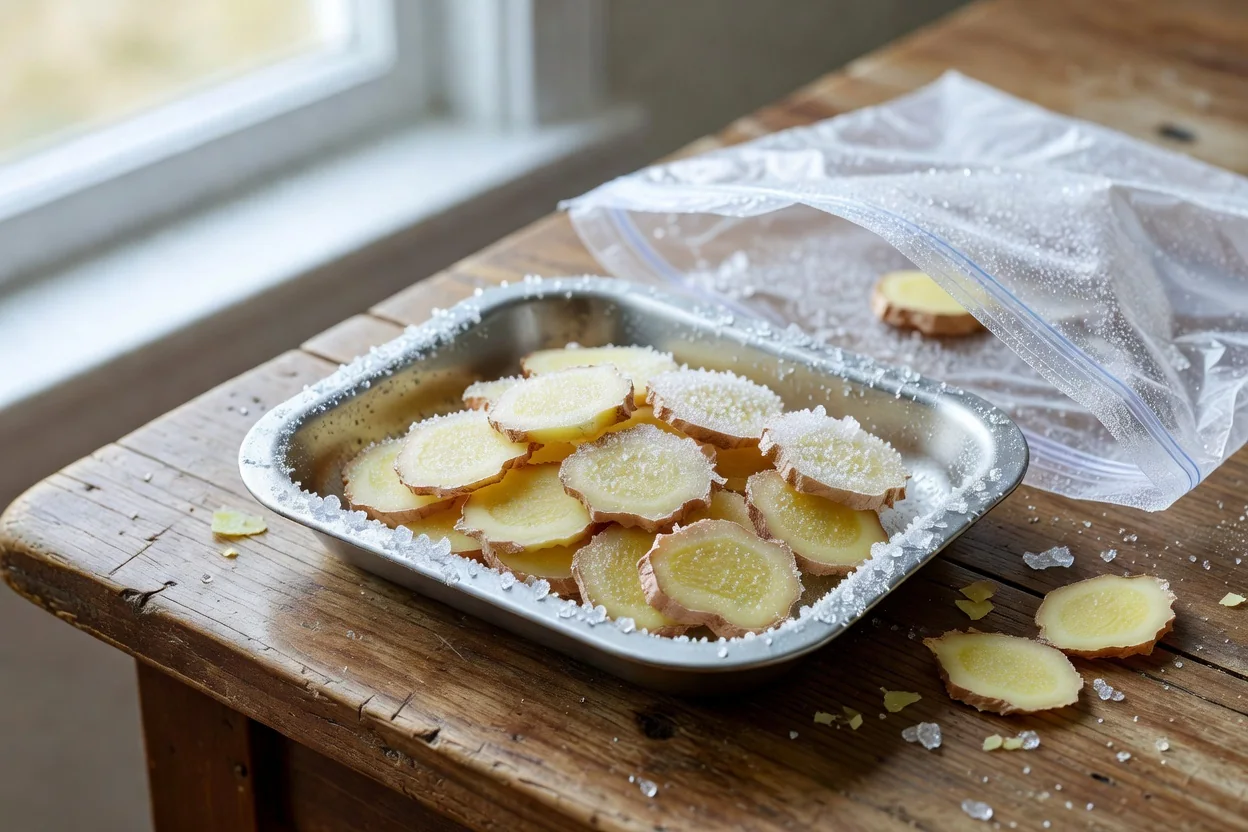
Frozen ginger is a kitchen secret worth adopting. The texture softens after thawing, but for grating into teas, marinades, curries and smoothies it works perfectly — in fact, frozen ginger grates more easily than fresh, with no stringy fibres. Freeze the whole unpeeled root in a freezer bag with the air pressed out, and grate what you need straight from frozen, skin and all.
For ready-to-use portions, peel and mince the ginger, press it flat in a freezer bag, and freeze. You can then snap off exactly as much as a recipe calls for.
| Method | Keeps for | Best use |
|---|---|---|
| Countertop, whole | 5–7 days | Frequent cooking |
| Fridge, wrapped | 3–4 weeks | Most households |
| Freezer, whole | Up to 6 months | Grating, tea, marinades |
| Freezer, minced flat | Up to 6 months | Portioned cooking |
How to Tell Ginger Has Gone Bad
- Soft or mushy spots — cut them away generously; if the whole root is soft, discard it.
- Mould — any visible fuzz means the root belongs in the bin, not the pot.
- Dark, greyish flesh inside — a sign of age; the flavour will be dull and musty.
- Wrinkled but firm — still usable. Soak in cold water for 30 minutes to plump it back up.
What About Pickled or Preserved Ginger?
If you know you will not get through a large root, preserving is an option. Ginger submerged in dry sherry or rice vinegar in a sealed jar keeps in the fridge for a couple of months and stays sliceable. Slices laid in honey keep even longer and give you a ready-made soothing spoonful for tea.
The Takeaway
Buy the big root without guilt. Week one on the counter, then into the fridge wrapped in paper, and whatever remains goes to the freezer. With that simple rotation, you will never throw out a shrivelled knob of ginger again — and you will always have some within reach when a recipe calls.