
All 16 World Cup 2026 Stadiums, Ranked
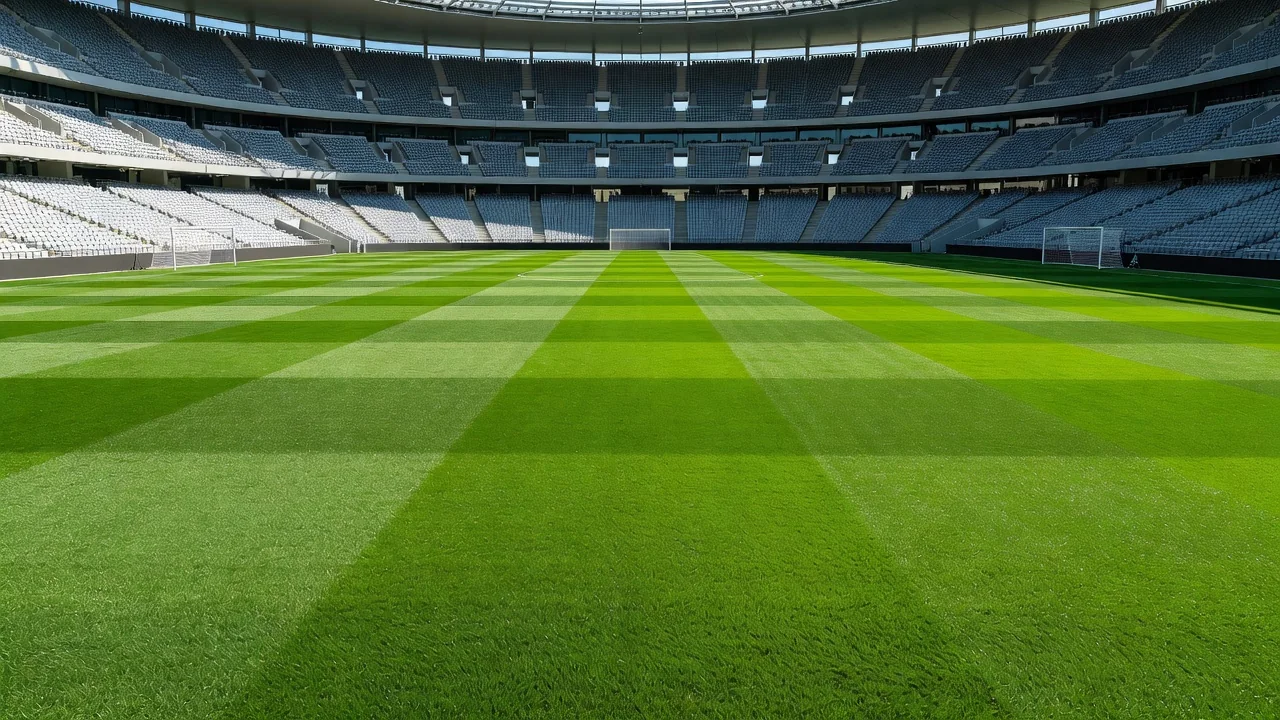
Sixteen stadiums across three countries hosted the biggest World Cup ever, and they were never going to be equal. Some are purpose-built football cathedrals, others are NFL coliseums borrowed for a month, and one or two became characters in the tournament's story all by themselves. This ranking weighs atmosphere, pitch quality, capacity, transport and the moments each venue hosted.
The methodology and the table
Atmosphere counts double: a World Cup stadium is a theatre before it is a building. Pitch quality matters because the tournament's biggest matches deserve fast, true grass. Transport and fan logistics decide whether the day is a pleasure or a trial. And history — the games a stadium hosted — cannot be ignored, because some venues simply got better draws than others.
| Rank | Stadium | City | Capacity | The case |
|---|---|---|---|---|
| 1 | Estadio Azteca | Mexico City | 87,000 | The only three-time World Cup venue; history you can touch. |
| 2 | MetLife Stadium | New York/New Jersey | 82,500 | The final's stage — massive, loud, and it delivered. |
| 3 | SoFi Stadium | Los Angeles | 70,000 | The most modern arena on Earth, spectacular indoors. |
| 4 | Estadio BBVA | Monterrey | 53,000 | Purpose-built for football, mountain backdrop, fierce noise. |
| 5 | Estadio Akron | Guadalajara | 48,000 | Mexico's modern bowl, superb atmosphere. |
| 6 | AT&T Stadium | Dallas | 92,000 | The biggest stage of all, hosted the most matches. |
| 7 | Lumen Field | Seattle | 69,000 | The loudest crowd in North American sport. |
| 8 | BMO Field | Toronto | 45,000 | Intimate, football-first, Canada's home advantage. |

Why the Azteca still rules
No stadium in the world carries what the Azteca carries. It hosted the finals of 1970 and 1986 — Pele's coronation and Maradona's masterpiece — and in 2026 it became the first venue to stage matches at three World Cups. The renovation modernised the bowl without flattening its soul, the altitude still tests visiting lungs, and the opening match atmosphere reminded everyone that football's deepest roots in North America are Mexican. Rankings like this should resist nostalgia, but the Azteca's case is not nostalgia. It is the only venue where the building itself is part of football history.
The American giants and the final's home
MetLife Stadium got the final, and the final got a stage worthy of it: eighty-two thousand seats, a skyline backdrop, and a week of New York energy that no other city could replicate. SoFi in Los Angeles is the architectural marvel — a translucent-roofed indoor coliseum that looked like the future on every broadcast. AT&T Stadium in Dallas hosted more matches than any other venue, its sheer scale making every group game feel like an event. The trade-off across the NFL venues was universal: cavernous bowls built for a different sport, with atmospheres that depended entirely on which nations' fans filled them.
Mexico's football-first venues and Canada's quiet win
Estadio BBVA in Monterrey might be the best pure football ground on the continent — steep stands, a mountain framed behind one goal, and a crowd that sings for ninety minutes. The Akron in Guadalajara matched it for noise. Canada's venues were the tournament's quiet success: BMO Field in Toronto offered intimacy the mega-stadiums could not, and Vancouver's BC Place gave the Pacific coast its loudest fortnight.

The bottom half, and why they struggled
- Kansas City, Houston and Miami: fine modern bowls, but generic atmospheres for neutral group games.
- Atlanta and Santa Clara: spectacular buildings, distant pitches — the American stadium paradox.
- Philadelphia and Boston: historic cities, transport headaches on matchdays.
The verdict
The 2026 venues proved a World Cup can be staged across a continent without losing its soul — as long as the soul venues carry the big nights. Azteca, MetLife and Monterrey will live in the tournament's memory; the rest did their jobs. For 2030, the lesson is simple: atmosphere cannot be constructed in a decade. It has to be inherited.
The pitches: an unseen battle
The tournament's quiet technical story was grass. Several NFL venues played on artificial turf by default, and installing natural grass fields worthy of a World Cup — grown off-site, trucked in, laid over the turf — became one of the largest agronomy operations in sports history. The results were mixed: the marquee venues produced excellent surfaces, while one or two secondary stadiums showed seams and slow patches that players noticed. FIFA's pitch standards, tested for the first time at this scale, largely held — but the lesson for 2030 is that grass quality is now a competitive variable, not a cosmetic one.
What the attendances proved
The final attendance records told their own story about where the tournament lived. The mega-venues in Dallas, Los Angeles and New York drew the biggest raw numbers, but the fullest houses relative to capacity came in Mexico, where every match felt like a home game. The three-country experiment produced three distinct tournament atmospheres inside one event — corporate spectacle in the United States, football-first passion in Mexico, and joyful novelty in Canada. Future hosts will study all three models, and the smartest will try to combine them.
More rankings

World Cup 2026 Verdict: Did the 48-Team Format Work?
Twelve groups, 104 matches, 48 teams — the honest verdict on what the biggest World Cup ever delivered, what it diluted and what must change by 2030.
2026-08-31
World Cup 2026 Debutants: The First-Timers Ranked
Cape Verde, Jordan, Uzbekistan, Curacao — how each first-timer qualified, what they brought to the tournament, and who made the most of the stage.
2026-08-23
5 Lessons World Cup 2026 Taught Club Football
Fatigue management, transfer inflation, tactical fashion and scouting — the five lessons every smart sporting director took from North America.
2026-08-20